What to Do After Being Scammed (Step-by-Step)
If you've just realized you've been scammed, the priority is to act calmly and quickly. The steps below are ordered by urgency — start at the top and work down. No step here promises that funds will be recovered; the goal is to protect what you can and put you in the strongest possible position to report and pursue legitimate options.
Stop all further payments or contact
If the scam is still active, stop immediately. Do not send additional money, even if you're told it's required to "unlock" or release funds already sent — this is a common follow-up tactic.
Contact your bank or card provider
Call the number on your card or your bank's official app — never a number given by the scammer. Ask them to freeze, block, or reverse the transaction if it's still pending, and request a reference number.
Secure your accounts
Change passwords on any affected account, then your email, then any account sharing that password. Enable two-factor authentication where available.
Document everything while it's fresh
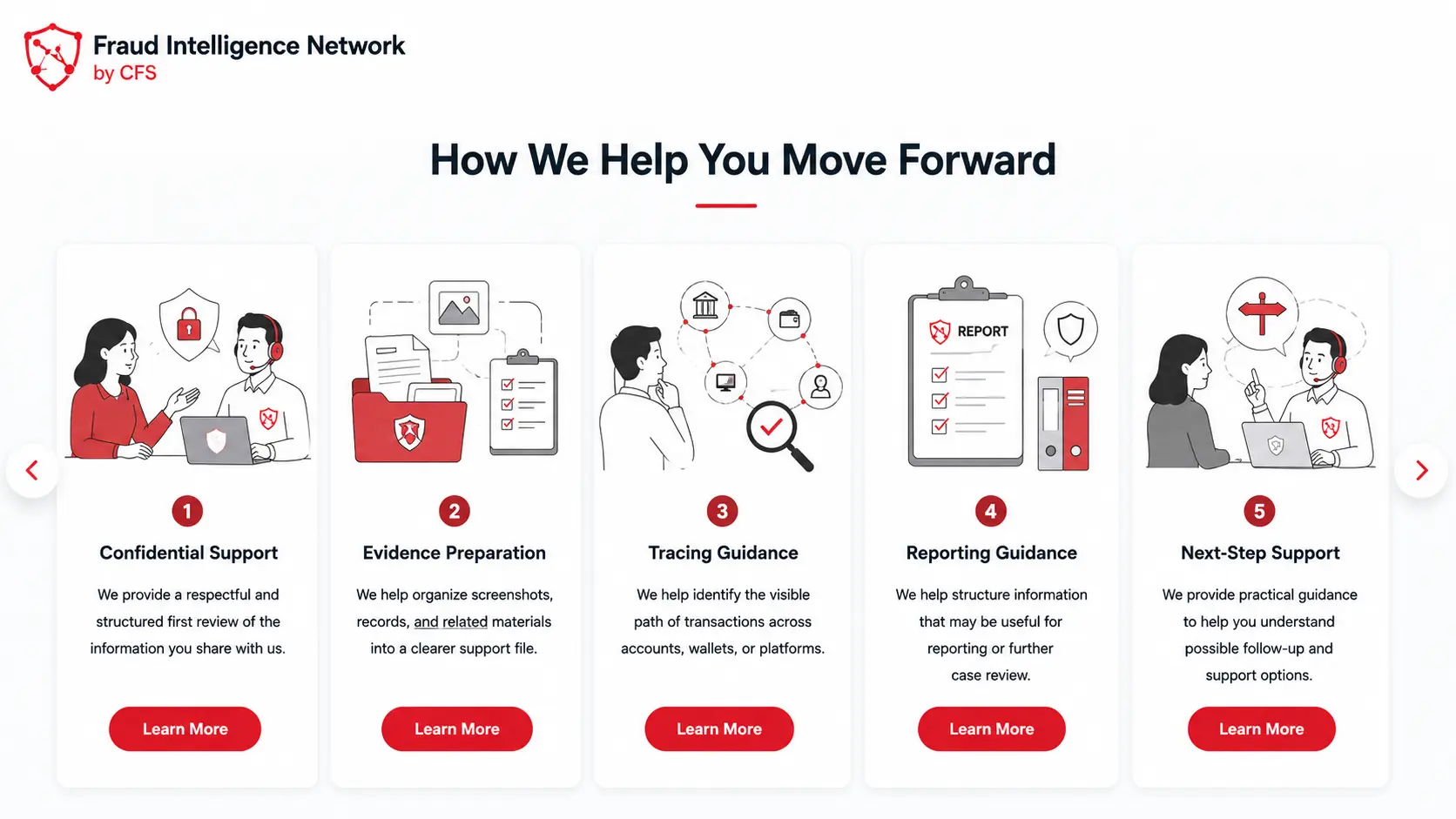
Save screenshots, transaction receipts, wallet addresses, platform messages, and any names or numbers used. This file supports every report and dispute that follows.
Report to the right authority
File with your national fraud reporting body — for example the FTC or IC3 in the US, or Action Fraud and 159 in the UK — and a local police report if your bank or bureau requires one.
Ask about a chargeback or dispute
If you paid by card, your issuer's chargeback process is often the strongest recovery avenue. Provide your documentation and any reference numbers from your fraud report.
Even when full recovery isn't possible, each of these steps strengthens your case file and contributes to the broader effort to track repeat offenders. Be cautious of anyone who contacts you afterward promising guaranteed recovery for an upfront fee — this is a well-documented secondary scam pattern, not a legitimate recovery channel.